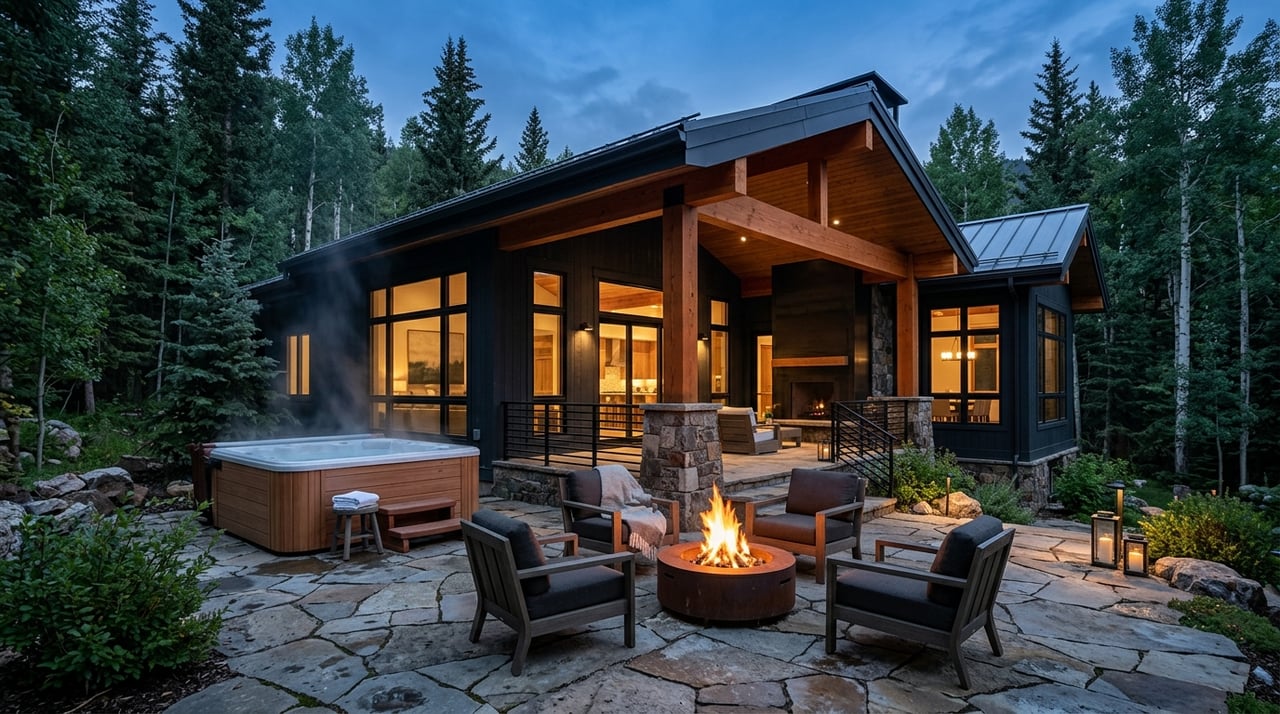
Understanding the Frisco Vacation Rental Market
July 9, 2026
July 9, 2026
If you are thinking about buying a vacation rental in Frisco, it is easy to focus on the mountain-town appeal and assume demand stays strong all year. The reality is a little more nuanced. Frisco has real, established visitor demand, but booking patterns shift with the seasons, local events, and the town’s short-term rental rules. Understanding those patterns can help you buy with clearer expectations and a smarter strategy. Let’s dive in.
Frisco has a broad demand base for a small mountain town. The town has 3,116 year-round residents, covers just 1.8 square miles, and sits on Dillon Reservoir about 95 miles from Denver International Airport. It is also within about 30 minutes of six ski resorts.
That combination matters if you are buying with short-term rental use in mind. Frisco is positioned as a convenient home base for visitors who want access to skiing in winter and lake, trail, and outdoor recreation in summer. The town also highlights its walkable layout, bike access, and connection to free public transportation, which supports its appeal for travelers who value convenience.
Frisco’s lodging market is not new or untested. The town says residential short-term rentals have been part of the local tourist economy for more than 40 years, alongside about 500 traditional hotel and motel rooms. For buyers, that points to a market with proven guest demand, but also one where you need to respect the operational realities and competition.
If you expect steady occupancy every month, Frisco may surprise you. Demand tends to follow a two-peak calendar, with one strong season in winter and another in summer.
Winter is one of Frisco’s clearest booking drivers. The Frisco Nordic Center typically operates from around Thanksgiving through early April, and the Adventure Park’s winter attractions reopen from late November into mid-December.
Frisco also benefits from being near six ski resorts while offering free public transportation. For many guests, that makes the town a practical base for ski trips, especially if they want easier access to dining, Main Street, and a central Summit County location rather than true ski-in, ski-out lodging.
Summer is the second major high-demand season. The Frisco Bay Marina opens for the summer season in late May and offers powerboat rentals, paddle-sport rentals, pontoon boat tours, and seasonal programming. The marina’s location at the eastern end of Main Street makes lake activity a real demand driver, not just a scenic bonus.
For buyers, this means summer revenue potential should be part of your analysis. Frisco is not only a ski-season story. Guests also come for the reservoir, events, downtown walkability, and easy access to outdoor recreation during warmer months.
Between those peak periods, demand usually softens. In Frisco, spring and late fall are typically the two shoulder seasons buyers should plan around.
Winter activities begin winding down in March, while the marina does not fully ramp up until late May. That often leaves April through mid-May as a slower booking window.
If you are underwriting a purchase, this matters. You may need to plan for more flexible minimum stays, more competitive pricing, or lower occupancy expectations during this stretch.
The marina rental season typically ends in late September, and early winter activity does not fully return until roughly mid-November or later. That makes October through mid-November another period that may require a more careful operating strategy.
This does not mean a property cannot book during shoulder season. It means buyers should avoid assuming a flat monthly income pattern and instead budget for seasonal swings.
One of the more important things buyers miss is how much local events can shape demand. Frisco has short booking spikes that sit outside the main ski and summer-lake windows.
The town’s July 4th celebration includes a fishing derby, pancake breakfast, parade, and concerts. Summer programming also includes marina events like Rock the Dock, while the Historic Park hosts Park After Dark events in late June, August, and September.
Frisco’s event calendar also extends into other parts of the year. Fall Fest brings arts, food, beer, and music to Main Street, and the community calendar includes events like Trick-or-Treat on Main Street and Spontaneous Combustion in February.
For a buyer, this means demand is not only seasonal. It can also be event-driven, with certain weekends outperforming nearby dates. A property that is easy for guests to access and enjoy during these busy periods may have an advantage.
In a compact town like Frisco, small location differences can shape guest appeal. That is especially true in summer, when lake access and downtown convenience play a bigger role in booking decisions.
The Frisco Bay Marina sits directly on Dillon Reservoir just steps from downtown, and the town notes that parking there is limited. Visitors are encouraged to bike, walk, or use Summit Stage.
That practical detail can affect how guests experience a stay. Properties that make it easier to reach Main Street, the marina, or transit may align better with summer demand patterns. Units with more convenient parking or simpler arrival logistics may also stand out during busy weekends.
Demand is only half of the equation. Buyers should also understand that Frisco’s short-term rental supply is capped.
The town limits short-term rentals to 25 percent of residential housing units, and it says that cap was reached in February 2023. The town also maintains a waitlist for new licenses.
That creates a different environment than markets where new short-term rental inventory can expand more freely. In Frisco, compliant properties with established licensing potential may be relatively scarce, which can matter when you evaluate long-term use and resale appeal.
A good-looking property is not enough if it does not fit the town’s operating rules. In Frisco, any property rented for less than 30 consecutive days requires a short-term rental license.
The town also requires license holders to maintain a 24/7 responsible agent, submit a parking plan, and comply with life-safety rules. Maximum occupancy is set at two people per bedroom plus four additional occupants.
There are also timing details buyers should not overlook. Licenses expire on April 30, and the annual renewal period runs from February 20 through April 30.
If you are comparing properties, it is smart to look beyond finishes and views. You also want to understand how a home fits parking expectations, occupancy limits, and ongoing compliance requirements.
Short-term rental performance is about more than gross revenue. You also need to understand local tax treatment when you model returns.
Frisco is a self-collecting sales-tax jurisdiction, and town lodging tax applies to rentals of 29 days or less. The town states that short-term rental bookings are subject to a 15.725 percent total tax burden.
Colorado Department of Revenue guidance also notes that room and accommodation rentals are generally taxable unless a 30-day or longer occupancy exemption applies. That is why buyers should confirm assumptions with a CPA, tax advisor, and local property manager before finalizing underwriting.
The biggest takeaway is simple: Frisco has real vacation rental demand, but it does not behave like a flat, year-round subscription business. It is a market shaped by winter ski travel, summer lake activity, event weekends, shoulder-season slowdowns, and a defined local licensing framework.
If you are buying in Frisco, it helps to evaluate each property through that lens. Ask how it will perform during the two peak seasons, how it may compete during shoulder months, how convenient it feels for guests, and how well it fits the town’s rules.
That is where local guidance can make a real difference. When you can pair purchase strategy with practical rental operations insight, you are in a better position to buy a property that supports both your lifestyle goals and your ownership plans.
If you want help evaluating a Frisco property through both a real estate and vacation-rental lens, connect with Ryan Greff.
Stay up to date on the latest real estate trends.





With years of experience and hands-on insight into the local market, Ryan provides tailored strategies to maximize value and simplify every step of the property journey.