Breckenridge Riverfront Homes vs In-Town Living
June 18, 2026
June 18, 2026
Wondering whether your ideal Breckenridge home is steps from Main Street, perched near the ski base, or tucked along the Blue River? If you are buying near the water here, the choice is not just about views. It is also about walkability, access, price, rental rules, and the kind of ownership experience you want. This guide will help you compare riverfront and in-town options in Breckenridge so you can narrow your search with more confidence. Let’s dive in.
Breckenridge offers a rare mix of mountain-town energy and water-side living. In-town buyers can find condos and homes close to Main Street, while a smaller set of properties sit along or near the Blue River with more privacy and stronger water access.
That variety matters because the lifestyle difference can be significant. One buyer may want to walk to restaurants, shops, and lifts. Another may care more about a patio by the river, outdoor space, and a quieter setting.
The market also remains premium priced. In 2026, reported benchmarks ranged from a median listing price of $1,512,500 to a typical home value of $1,205,969 and a median sale price of $1,144,315, depending on source and methodology. At the same time, Breckenridge was labeled a buyer’s market in March 2026, with homes selling about 4.06% below asking on average and a median 82 days on market.
If you want convenience first, in-town Breckenridge gives you the broadest menu of choices. Current Main Street examples have ranged from about $399,000 for a smaller condo to $625,000 for a somewhat larger condo, with more central or amenity-rich units around $749,900 to $860,000. Premium Main Street houses have also been listed around $1,965,000 and $3,400,000.
That spread shows how wide the in-town category can be. You may be comparing an efficient condo, a resort-style building with shared amenities, or a larger home in the walkable core. The right fit often comes down to how much you value location versus square footage and privacy.
Breckenridge’s Historic District shapes much of that core. The Town says it is one of the largest historic districts in Colorado, with design standards and a 9-units-per-acre density limit in much of the district. In practical terms, that helps explain why walkable in-town inventory often leans toward condos, townhomes, and smaller-lot homes instead of large estate parcels.
Buying in town usually means easier access to daily activities and more flexibility without getting in the car. Main Street has more than 200 restaurants, shops, and eateries, and the Town’s Free Ride bus system offers no-cost transportation within Breckenridge and to the ski resort.
The route serves practical stops including City Market, the Recreation Center, the Village, Four O’Clock Roads, Columbine, Broken Lance Drive, and Peak 9. For many buyers, that can make an in-town condo or townhome feel easier to use year-round, especially if you are visiting for shorter stays.
Peak 9 is the base area closest to downtown and Main Street. So if skiing and walkability both rank high on your list, in-town options near Peak 9 often deserve a close look.
Recent sales and listings help show how this segment stacks up:
These examples show a useful middle ground. You do not always need a detached riverfront home to enjoy water views or a near-water setting. Some in-town condos combine river adjacency with strong access to lifts, downtown, and transit.
If your goal is direct water access, true riverfront inventory is much more limited. It also tends to come with a meaningful price jump, especially when you move from condos into duplexes or detached homes.
Current examples illustrate that premium clearly. A duplex at 247 Shores Lane was listed at $2,775,000 with Blue River frontage, outdoor living features, and direct bus access to the gondola. Another property at 341 River Park Drive was listed at $3,300,000 with more than 100 feet of accessible Blue River frontage, plus trail and shuttle access to downtown.
At the top end, a legacy-style riverfront home at 31 Riverwood Drive has been described with the Blue River running through the property and a private island, with an estimated value around $7.0 million. That is a very different buying category from an in-town condo, both financially and operationally.
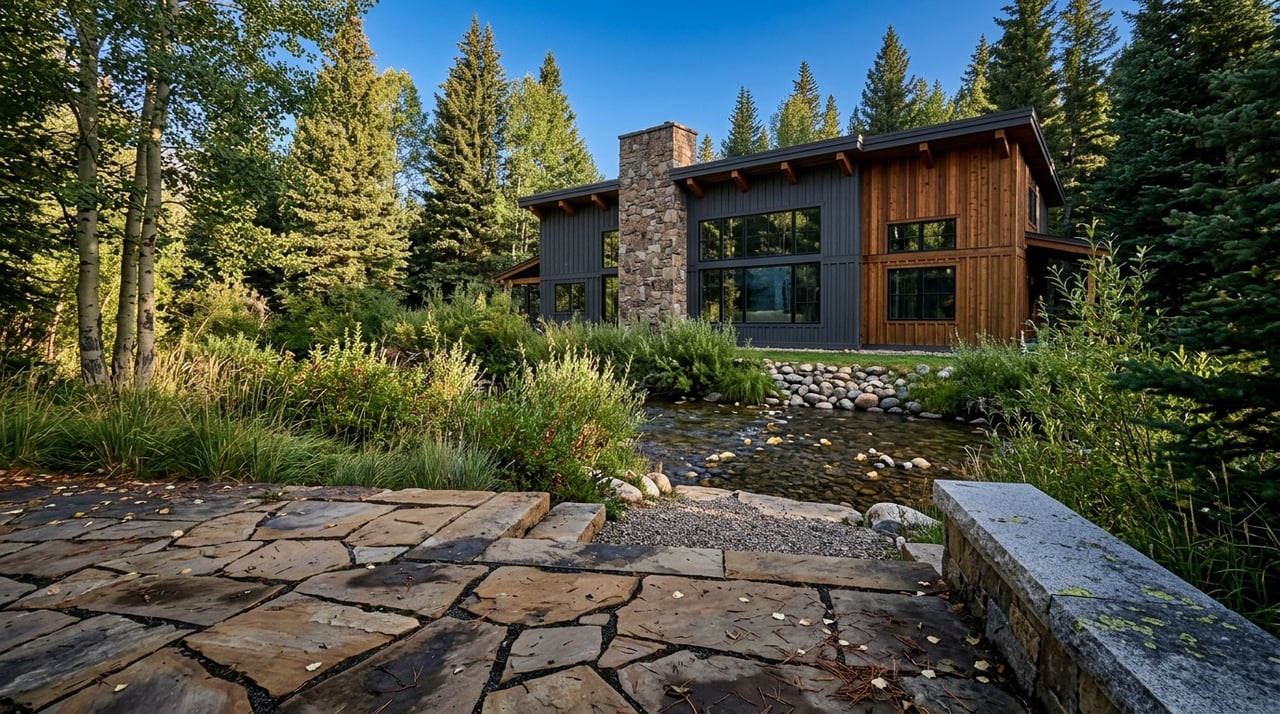
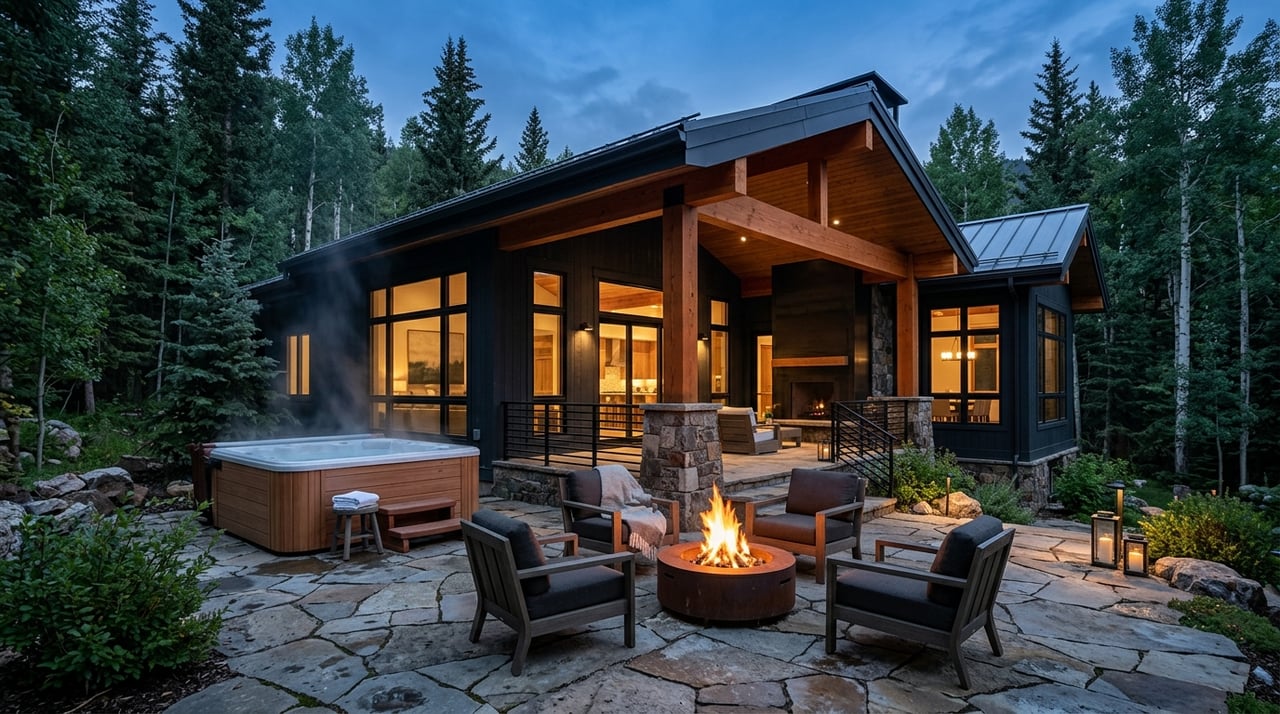
Blue River-area properties usually appeal to buyers who want a more private and immersive mountain setting. Direct frontage, larger outdoor areas, room for patios or hot tubs, and easy connection to fishing or trails can make these homes feel more like a retreat.
Breckenridge Resort highlights the Blue River as a fly-fishing destination, and the Blue River Recreation Path runs through town on a paved route with easy downtown access points. For many buyers, that combination of scenery and outdoor usability is the main reason to pay more for water adjacency.
The tradeoff is that true riverfront supply is limited. When fewer properties check those boxes, buyers should expect stronger competition for the right fit and less flexibility on location or style.
Choosing between these two categories usually comes down to priorities. Here is a simple way to compare them.
| Priority | In-Town Options | Riverfront Options |
|---|---|---|
| Walkability | Usually stronger, especially near Main Street and Peak 9 | Often lower, depending on exact address |
| Transit access | Often excellent with Free Ride access | Can still be good, but more location-specific |
| Ski convenience | Often stronger near Village, Columbine, and Four O’Clock areas | Varies by property |
| Privacy | Usually less private | Usually more private |
| Outdoor space | Often limited | Often better |
| Direct water access | Rare | Main draw |
| Entry price | Lower in smaller condos | Higher, especially detached homes |
| STR review | Often easier to analyze building by building and zone by zone | Still possible, but must be checked carefully |
If you want to walk to coffee, dinner, and the lifts, an in-town property may fit your day-to-day use better. If you picture mornings by the river and prioritize outdoor living over downtown convenience, riverfront may be worth the premium.
Breckenridge is not one-look real estate market. In-town architecture is shaped by the Historic District, where many notable buildings reflect the Victorian era and design standards guide new construction and changes.
That means you may see a very different design vocabulary in the walkable core than along the river. A Main Street home may carry a Victorian-style presentation, while a condo near the slopes may lean mountain-modern.
Riverfront properties often broaden that style range even more. Current examples include contemporary or modern design, while higher-end legacy homes may feature log beams, multiple decks, and a more classic mountain-home feel.
For buyers, that matters because style and location often move together here. If you are drawn to a certain look, your ideal architectural fit may naturally narrow your search area.
If rental use matters to you, do not assume every near-water or in-town property can be used the same way. The Town of Breckenridge requires a valid accommodation-unit license for rentals under 30 consecutive days, and those licenses are non-transferable. HOAs can also impose their own restrictions.
The Town’s posted update showed that the Resort Properties Zone had no waitlist, Zone 1 had 467 available licenses, and Zones 2 and 3 had no licenses available. That makes address-level review essential before you get too far down the path on any property.
This is especially important for second-home buyers and absentee owners who want occasional personal use plus rental income potential. A good purchase decision here is not just about the view or floor plan. It is also about matching the property to the current licensing framework and any HOA rules.
Buying near the river can be rewarding, but it can also add another layer of review. The Town requires a floodplain development permit for work within a FEMA Special Flood Hazard Area or for projects whose limits extend to within 30 feet of one.
For buyers, that does not mean you should avoid water-adjacent properties. It simply means due diligence matters more. If you are comparing riverfront homes, it is smart to understand not only the current condition of the property, but also how future improvements or exterior work could be affected.
This is one reason local guidance can be especially valuable in Breckenridge. Details like zoning, rental rules, HOA restrictions, and floodplain considerations can materially shape the ownership experience.
If you are still deciding, start by ranking your top three priorities. Most Breckenridge buyers near the water are balancing some version of walkability, ski access, privacy, views, rental flexibility, and budget.
You may find that your answer becomes clearer when you frame the choice this way:
That practical split matches what current inventory suggests. Buyers focused on privacy and direct water access often end up looking at Blue River, Shores, River Park, or Riverwood-style settings, while buyers focused on walkability and easier day-to-day convenience often gravitate toward Main Street, the Village, River Mountain Lodge, and Blue River-facing downtown condos.
Whether you are looking for a second home, a mountain getaway with rental potential, or a full-time Breckenridge property, the best outcome usually comes from aligning your lifestyle goals with the right micro-location.
If you want help comparing riverfront and in-town options in Breckenridge, Ryan Greff can help you evaluate location, lifestyle fit, and property use so you can buy with clarity.
Stay up to date on the latest real estate trends.
With years of experience and hands-on insight into the local market, Ryan provides tailored strategies to maximize value and simplify every step of the property journey.