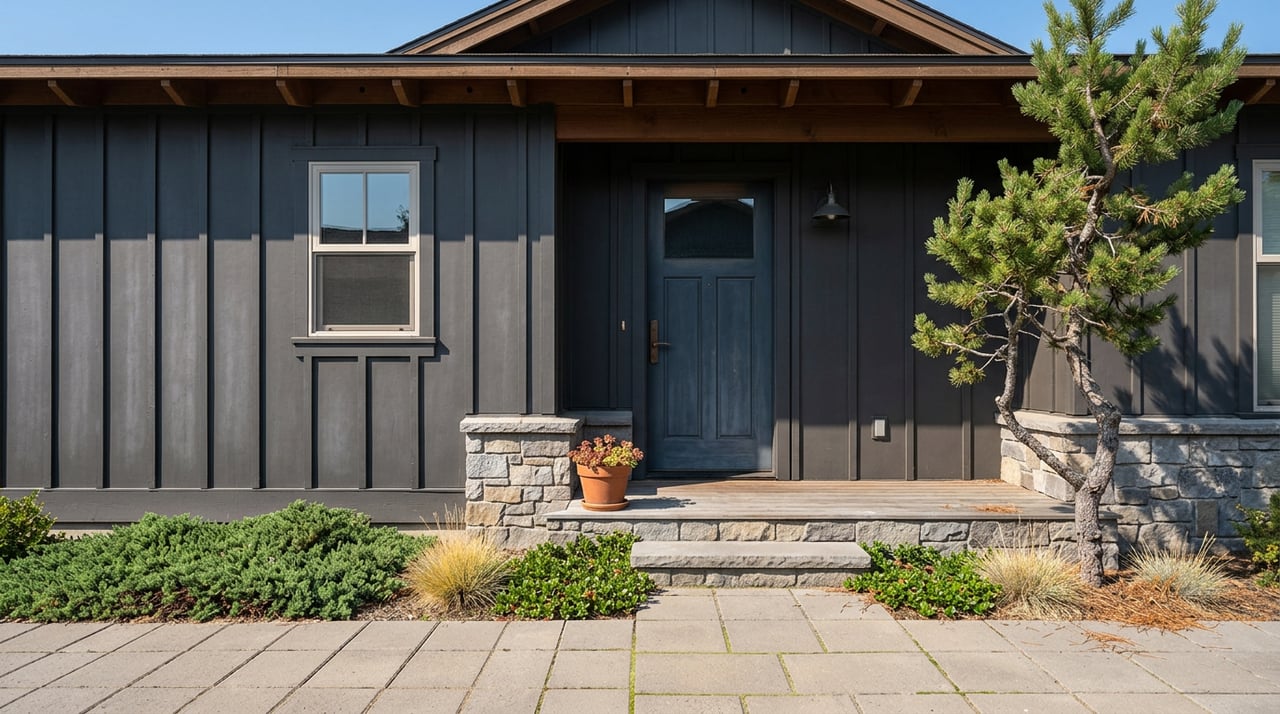
Breckenridge Deed-Restricted Homes and the Real Price Gap
August 20, 2026
August 20, 2026
A buyer scrolling listings from Denver or Dallas pulls up a two-bedroom condo in Breckenridge asking $340,000. Two blocks over, a nearly identical unit is listed at $780,000. Same square footage, same building era, same walk to Main Street. The buyer assumes a typo, or a fixer-upper, or a motivated seller. They call to ask about it and hear the phrase that ends the conversation: it's deed restricted. You don't qualify.
This happens constantly in Summit County, and it happens because of a fact most out-of-market buyers never see on a portal search: roughly three out of every four full-time homes in Breckenridge carry a deed restriction that limits who can buy them. According to reporting from High Country News, about 1,700 of the town's estimated 2,300 resident-occupied homes are restricted to the local workforce. That is not a footnote in a niche corner of the market. That is most of the town's non-vacation housing stock, walled off from second-home buyers, remote workers, and investors by design.
If you are comparing Breckenridge to other mountain towns using a median price you found online, this is the number that should change how you read it. The "market" available to you as an out-of-state buyer is smaller and pricier than the headline suggests, because the town has spent years deliberately routing its cheapest inventory to a different buyer pool entirely.
A deed restriction in Breckenridge is a legal covenant, recorded against the property, that survives every future sale. The core terms vary by program, but the common thread across almost all of them includes a requirement that at least one household member work 30 or more hours a week in Summit County, that the home serve as the owner's primary residence, and often a cap on future appreciation of 2 to 3 percent a year. Some also cap the maximum resale price outright.
High Country News profiled a 27-year-old emergency medical technician who bought a two-bedroom condo near the base of the mountain at more than 20 percent below the price of comparable market-rate units. He used the town's Housing Helps program, which paid him 10 percent of the purchase price toward his down payment in exchange for adding an appreciation cap of 3 percent a year. He is not a millionaire in a town where the average listing runs into the millions. He is a full-time local employee who qualified for a program that most buyers reading this piece would not.
That is the trade the town has built. A buyer gives up open-market upside, and in exchange gets a lower entry price and a real shot at homeownership in a place where wages have not kept pace with real estate. It is a good trade for the person it is designed for. It is simply not a trade you can opt into from outside that pool.
If your interest in a discounted listing is short-term rental income rather than a place to live, the deed restriction closes that door too. Deed-restricted units in Summit County are categorically barred from short-term rental use. The Town of Silverthorne's own ordinance states it plainly for its Area 3 workforce housing, and Summit County's Housing Helps guidelines go further, treating properties that already prohibit short-term rentals as a low priority for additional restriction funding, since those homes are already serving locals.
Breckenridge has specific subdivisions where this shows up at the HOA level, not just the deed level. Farmers Grove, Highland Meadows, the Juniata Subdivision, Kenington Place Townhomes, Kingdom Park Townhomes, and Powder Downs Townhomes all carry covenants that restrict short-term rental activity in addition to any deed restriction on individual units. A buyer running rental income projections on a listing in one of these communities without checking the covenant first is building a spreadsheet on a use case the property was never built to support.
This is not a legacy policy winding down. Breckenridge passed a $50 million housing plan in 2022 and has added more than 400 new deed-restricted units since, with roughly 300 more expected over the next four years. The town's two main tools for growing that stock, Housing Helps and Buy Downs, both had active 2026 budgets: $3.3 million for Housing Helps and $2.5 million for Buy Downs, according to figures presented to Breckenridge Town Council in January 2026. In 2025 alone, the town funded 21 homes through Housing Helps out of 59 applications, converting a mix of condos and single-family homes into permanently restricted units at an average cost of just under $104,000 per unit.
The newest large-scale addition is the Runway Neighborhood, a town-led development where Phase 1 broke ground in August 2025 with 81 units planned. Roughly 95 percent of those homes are expected to price between $351,000 and $850,000, reserved for households earning between 85 and 180 percent of area median income, with occupancy targeted for winter 2027 through 2028. Older workforce neighborhoods like Wellington, Vista Verde, Alta Verde, and Larkspur already anchor this side of the market, and Vista Verde reported 93 percent occupancy as of early 2026.
None of this inventory will ever show up as competition for a market-rate buyer, because none of it is available to one. But it does show up in aggregate market data, sometimes without a clean way to separate it out, which is part of why headline price figures for Breckenridge can look inconsistent depending on the source and the month.
Pull three different price snapshots for Breckenridge in 2026 and you will get three different stories. One national portal reported a median list price around $1.24 million in August 2026. Another reported a median sale price closer to $1.1 million over the trailing three months ending in May 2026, based on only 91 closed sales that month. High Country News, in the same February 2026 reporting on the town's workforce housing program, cited an average listing price of $1.85 million. A separate market report for that same month put active inventory at just over 100 homes, a median of 126 days on market, and a median sale price closer to $1.275 million.
That spread is not a data error. Breckenridge is a small, high-value market where a handful of closings in either direction can swing a monthly median significantly, and where deed-restricted sales sometimes get folded into broader county or town statistics without a clear label. A buyer using any single median as a planning number is working with a figure that may include homes they cannot purchase, exclude the luxury segment that actually sets the ceiling, or reflect a sample size small enough that a single high-end closing shifts the whole number.
The more useful question is not "what is the median in Breckenridge" but "what does the true market-rate segment look like once the workforce-restricted three-quarters of the town's full-time housing is removed from the comparison." That segment is smaller, it is pricier on average, and it is the one you are actually competing in.
As Breckenridge's longtime housing director put it when describing the shortage of open-market starter homes, the town's housing math has produced what she called a missing middle, where the gap between deed-restricted housing and true market rate has widened so far that people who get into restricted units mostly stay there, because the jump to full market price is no longer realistic on a local salary.
If a Breckenridge listing looks meaningfully cheaper than everything around it, the deed restriction question should come before the excitement, not after. The property listing itself will usually disclose it, but boundary lines in Summit County are not always intuitive, and a mailing address can sit inside a deed-restricted development without an obvious visual cue from the street.
The most reliable way to confirm a specific parcel's status is Summit County's own property deed restriction records, which list deed restrictions by property. For context on how the town's workforce housing programs work and how much they have expanded, the Town of Breckenridge Housing Department publishes its program history and accomplishments directly.
| What you might see | What it likely means |
|---|---|
| Listing priced 20 percent or more below comparable units nearby | Check for an employment or income-based deed restriction before assuming it's a bargain |
| Listing in Wellington, Vista Verde, Alta Verde, Larkspur, or Runway | Deed-restricted workforce housing, not available to buyers without a qualifying local job |
| HOA in Farmers Grove, Highland Meadows, Juniata, Kenington Place, Kingdom Park, or Powder Downs | Short-term rental use is restricted at the covenant level regardless of deed status |
| A median price from a national portal that seems out of step with a local market report | Likely reflects a different sample size, time window, or mix of restricted and market-rate sales |
Can I buy a deed-restricted home in Breckenridge if I don't work in Summit County? Generally no. Most deed restrictions require at least one household member to work 30 or more hours a week in Summit County, and qualification is verified through the local housing authority before a sale can close.
Does a deed restriction ever go away? Deed restrictions in Breckenridge typically run with the land in perpetuity, meaning they remain in place through every future sale, not just the current owner's term.
If the median price looks lower one month, does that mean the market softened? Not necessarily. Given how few homes close in a typical month in a market this size, a shift in the mix of what sold, including how many deed-restricted or luxury properties were part of that sample, can move the median more than actual demand did.
Reading a Breckenridge listing sheet correctly means knowing which numbers apply to you and which ones belong to a different buyer entirely. That distinction changes how you should shop, how you should budget, and what you should expect an agent to check before you get attached to a price. If you are comparing Breckenridge to other Summit County towns and want a straight read on what a specific property can and cannot do, Ryan Greff at Majestic Lodging & Real Estate Company can walk you through the zoning, the covenant, and the real market-rate comparison before you make an offer. Let's Connect.
Stay up to date on the latest real estate trends.
With years of experience and hands-on insight into the local market, Ryan provides tailored strategies to maximize value and simplify every step of the property journey.